Visibility Is Not Enough: Why Ports Need Control
Better dashboards can help ports see what is happening. But real value begins when information supports decisions and action.

Port digitalisation is often discussed through visibility: better data, clearer dashboards, more real-time information and shared views of what is happening.
All of that matters. But it is not enough.
A dashboard can show that a queue is forming, that a gate is delayed, that a loading process is behind schedule or that one flow is moving faster than another. But if that information does not help the right people decide and act at the right moment, the port is still reacting too late.
In daily operations, the real question is not only: what is happening?
The real question is: what should we do about it?
From dashboards to decisions
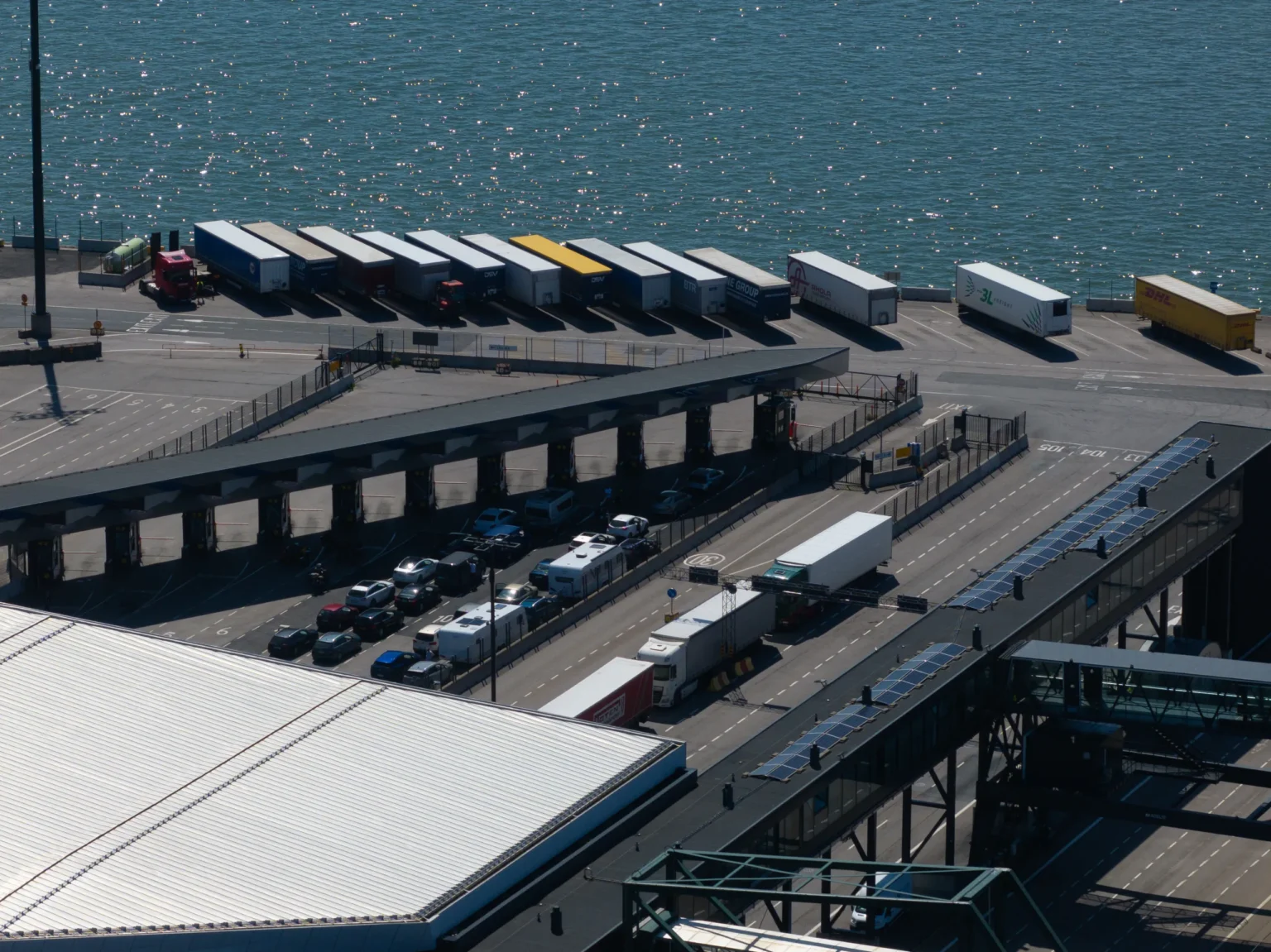
Ferry and ro-pax terminals are full of small, connected events. Passenger flows, vehicle traffic, cargo, operator requirements, gate capacity, access rights, weather, safety and vessel schedules all affect one another.
Complexity in a port is rarely one single problem. More often, it is hundreds of small events happening at the same time – each one able to affect the flow.
This is why visibility needs to become something more useful.
Ports need shared situational awareness, but they also need the ability to prioritise, coordinate and act. If a lane needs to be opened, a flow redirected, a display updated or a team alerted, the value is created only when the information leads to action.
That is the shift from visibility to control.
What control means in port operations
Control does not mean removing people from decision-making. Quite the opposite.
In port operations, people still make the decisions that matter. They know the local environment, the operational rhythm, the exceptions and the practical realities of each day. Digital systems should support that expertise, not replace it.
Control means that the right people can see the same situation and act on the same information. It means that operational data is not locked inside separate systems or individual teams. It means that a small delay can be recognised early enough for the port to still have options.
In practice, this can mean the ability to:
- see live flows, departures and exceptions
- decide what to prioritise
- guide traffic, passengers or vehicles more clearly
- update gates, barriers, displays or access rights
- learn from historical data and performance trends
When these steps connect, digitalisation becomes more than reporting. It becomes operational support.
Confidence is the result
The outcome ports are looking for is not simply more data.
It is confidence.
Confidence that the departure is still on pace. Confidence that teams are working from the same information. Confidence that exceptions can be noticed early enough. Confidence that complex daily operations are not only visible, but controllable.
That is why at Weasel Port Solutions we often describe the journey like this:
Visibility → Control → Confidence
Visibility gives information.
Control creates practical value.
Confidence is what daily operations gain.
“Any software can show what is happening. The real question is what happens next.”